
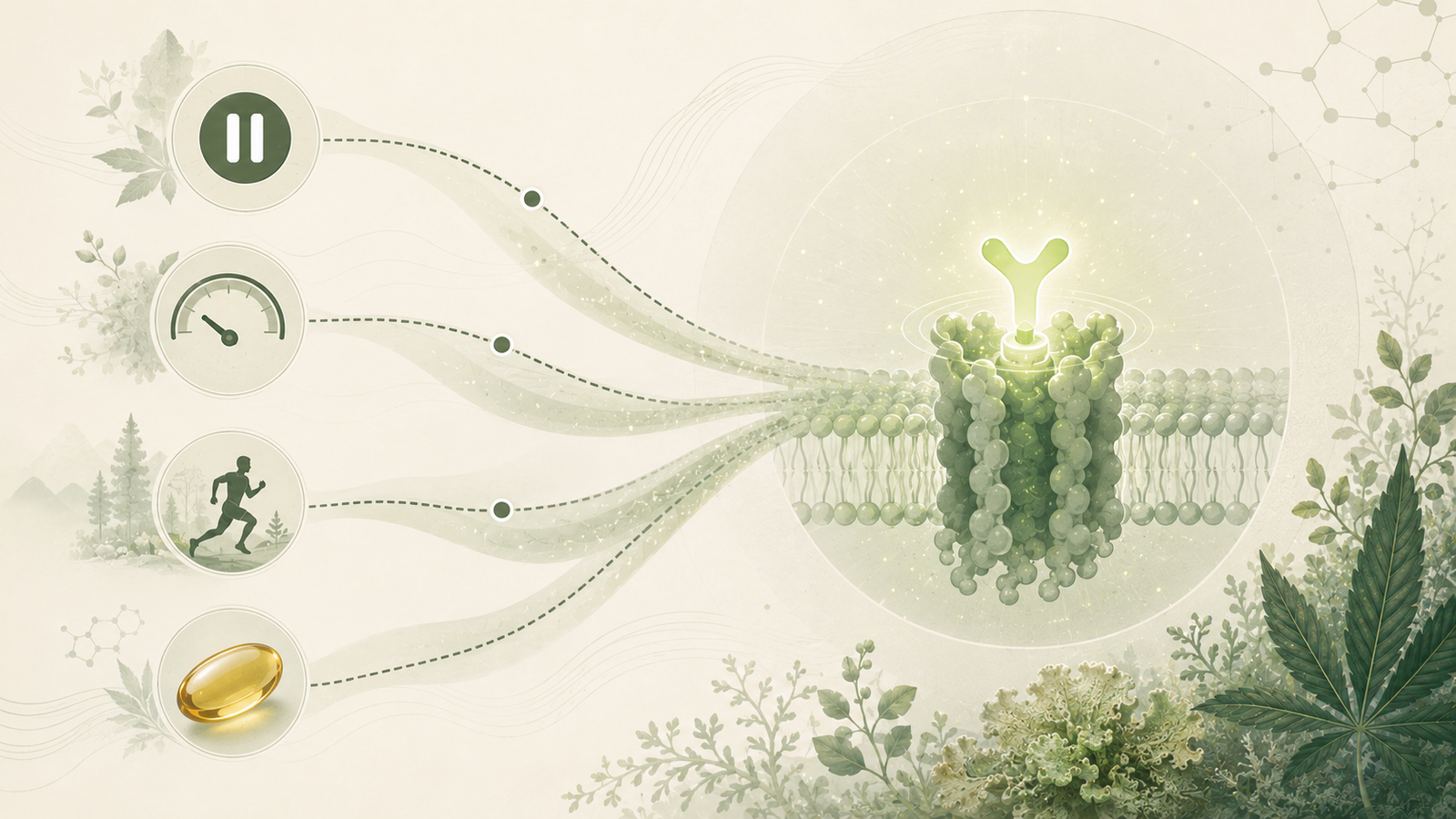
Dab tolerance is your body adapting to the very high THC dose that concentrates deliver, so the same dab does less than it used to. Because dabs pack far more THC per hit than flower — often 60 to 90 percent THC versus roughly 15 to 25 percent — they drive the fastest, deepest tolerance of any consumption method. The upside: it’s a normal, reversible adaptation, and you can bring it back down by stepping toward flower, dabbing at lower temperatures, or taking a break.
Below, we cover why concentrates build tolerance faster than anything else, why you keep needing bigger dabs to feel it, how dab tolerance differs from flower tolerance in practice, and the honest options for resetting and managing it.
Do dabs increase tolerance faster?
Yes — dabs build tolerance faster and deeper than flower, and the reason is dose. THC produces its effect by binding to CB1 receptors in your brain and nervous system. With repeated exposure, your body reduces how many of those receptors are available — a process called downregulation — so each hit has fewer places to land. If you want the full mechanism, we break it down in our guide to what cannabis tolerance is, its causes and timeline.
Concentrates like wax, shatter, rosin, and live resin are simply a much larger dose of THC delivered in one hit. A single dab can contain several times the THC of a bowl of flower, which means each session hits your CB1 receptors with a heavier load. More activation, more often, pushes those receptors to downregulate faster.
That mechanism is well established, and so is the reassuring flip side: it reverses. A 2012 study in Molecular Psychiatry (Hirvonen et al.) found that CB1 receptor levels in chronic cannabis users returned toward normal after roughly four weeks of abstinence. Your receptors aren’t damaged by dabbing — they’re turned down, and they can turn back up. For the general timeline of how fast this happens, see how quickly weed tolerance builds.
Why do I need to dab more to feel it?
If your dabs keep getting bigger just to reach the same place, that’s dose creep, and it’s the visible symptom of a downregulated CB1 system. The dab that once floored you now barely registers, so you load a bigger scoop or dab more often — which drives tolerance up further. It’s a fast-moving loop, precisely because concentrates start from such a high dose.
Dabbing also makes the loop easy to miss. The effect arrives within seconds, so it’s tempting to immediately take another hit rather than wait, and the sheer potency means small increases in your scoop are large increases in actual THC. Within weeks, a heavy dabber can be consuming several times the THC of an average flower smoker without it feeling like a big jump.
The National Institute on Drug Abuse (NIDA) notes that today’s high-potency concentrates deliver much larger amounts of THC than the cannabis of past decades, which is exactly the kind of sustained, heavy exposure that drives tolerance. If you want to know where you land, see what a high THC tolerance actually looks like.
Is dab tolerance different from flower tolerance?
The underlying biology is identical — both are CB1 downregulation — but dab tolerance shows up differently in practice because of how much THC concentrates deliver per hit.
- It climbs faster. Because each dab is a bigger dose, your receptors downregulate more quickly than they would on flower alone. Many people find their tolerance rockets after switching from bowls to a rig.
- It resets to a higher floor. Once you’re acclimated to concentrate-level THC, flower can feel weak by comparison — not because flower stopped working, but because your baseline has moved up.
- Cross-tolerance is total. Tolerance isn’t split by method; it all runs through the same CB1 receptors. Heavy dabbing raises your flower and edible tolerance too, so you can’t dodge it by switching formats.
So there isn’t really a separate “dab tolerance” — you have one THC tolerance that concentrates push up faster and further than any other method. That’s the same reason stepping down to flower is such a useful lever, which we get to next.
How do you lower dab tolerance?
Because dab tolerance runs on the same CB1 resensitization principle as any cannabis tolerance, the fix is the same: reduce how hard and how often you’re activating those receptors so they can return toward baseline. A few approaches, from gentlest to most complete:
- Step down to flower. Swapping concentrates for flower is an easy first move that cuts your per-hit THC dose dramatically without asking you to quit. Lower activation gives your receptors room to recover while you still consume.
- Dab at lower temperatures. Low-temp dabs and cold starts vaporize less material per hit and use less of your concentrate, which trims your overall THC intake. It also tends to be easier on your lungs. It won’t reset you on its own, but it slows the climb.
- Take a tolerance break. The most complete reset is stepping away from THC entirely. Based on the Hirvonen findings, a substantial reset points toward the multi-week range, though shorter breaks still help. See taking a cannabis tolerance break for what to expect.
- Consider an olivetol-based approach. Undoo Reset is an olivetol softgel marketed as a shorter, 5-night alternative aimed at changing receptor occupancy rather than asking you to abstain for weeks. It’s a supplement, and the mechanism is proposed rather than clinically proven.
Whichever route you pick, the principle is identical: less CB1 activation lets your receptors resensitize. For a full walkthrough of the options and timing, see how to reset cannabis tolerance.
Undoo Reset is a dietary supplement. It is not intended to diagnose, treat, cure, or prevent any disease, and it is not a way to pass a drug test. This page contains affiliate links. 21+ only; follow your local laws.
How to slow dab tolerance without quitting
You can’t stop tolerance entirely if you dab regularly, but you can slow how fast it climbs. A few habits help:
- Find your minimum effective dab. Use the smallest scoop that gets you where you want to be, and resist the urge to immediately go again. Chasing a bigger hit is the fastest way to escalate.
- Keep temps low. Cold-start and low-temp dabs deliver a satisfying effect on less material, so you burn through less THC per session.
- Build in low or no days. Spacing out sessions gives your receptors periodic breathing room, which slows downregulation compared with dabbing throughout the day.
- Rotate down to flower. Mixing in flower days keeps your average THC dose lower than an all-concentrate routine, which keeps tolerance from spiking.
Lower tolerance isn’t only about the high — concentrates are expensive, so dabbing less to feel more is money back in your pocket.
Frequently asked questions
Do dabs increase tolerance faster?
Yes. Dabs deliver far more THC per hit than flower — often 60 to 90 percent THC versus 15 to 25 percent — so they hit your CB1 receptors with a much heavier load and drive downregulation faster. It’s the same adaptation behind all cannabis tolerance, just accelerated by the higher dose, and it reverses after a break per Hirvonen et al. (2012).
How do you lower dab tolerance?
Reduce your CB1 activation so your receptors can resensitize. That can mean stepping down to flower, dabbing at lower temperatures, spacing out sessions, taking a multi-week tolerance break, or an olivetol-based approach like Undoo Reset marketed as a shorter alternative. The reset principle is the same one that works for flower tolerance.
Why do I need to dab more to feel it?
Because your CB1 receptors have downregulated in response to repeated high-THC exposure, so each dab produces less effect than it used to. Loading a bigger scoop chases the feeling but pushes tolerance up further. It’s a signal to reset — step down to flower or take a break — rather than to keep climbing.
Is dab tolerance different from flower tolerance?
The biology is the same — both come down to CB1 downregulation — and they fully cross over, so heavy dabbing raises your flower tolerance too. Dab tolerance mainly differs because it climbs faster and resets to a higher floor, thanks to the much larger THC dose concentrates deliver per hit.
The bottom line
Dab tolerance is normal, it’s not permanent, and it works on the same CB1 machinery as every other kind of THC tolerance — just amplified by how much THC a concentrate delivers in a single hit. Lower temps and flower days slow the buildup, and a proper reset brings the effect back. If you’d rather not commit to weeks off, see how the olivetol reset behind Undoo Reset is designed to work and decide what fits you.