
Olivetol is a natural compound — chemically named 5-pentylresorcinol — found in certain lichens and closely related to the cannabinoids in cannabis. In the lab it’s long been known as a building block in the chemistry behind THC. More recently, it’s become the active ingredient in Undoo Reset, a supplement marketed to help reset cannabis tolerance.
Part of our complete olivetol guide.
Below, we break down what olivetol actually is, where it comes from, how it relates to THC and your CB1 receptors, and what the science does — and doesn’t — establish.
What is olivetol, chemically?
Olivetol is a small organic molecule with the formula C₁₁H₁₆O₂. Its formal name is 5-pentylresorcinol, and according to PubChem (compound CID 10377), it belongs to a class of compounds called resorcinols — a benzene ring with two hydroxyl (–OH) groups and a five-carbon pentyl tail.
That structure matters. The same resorcinol-plus-pentyl backbone appears inside THC, CBD, and other cannabinoids. In simple terms, olivetol looks like a piece of a cannabinoid molecule — which is exactly why chemists find it so useful.
What is olivetol made from?
Olivetol occurs naturally in some species of lichen. In the cannabis plant itself, a closely related compound — olivetolic acid — is a genuine precursor in THC biosynthesis: the plant combines it with another molecule to build the cannabinoid skeleton. Olivetol is essentially the decarboxylated (acid-removed) cousin of that natural precursor.
Most olivetol used commercially isn’t harvested from lichen, though. It’s produced synthetically in a lab, which yields a consistent, high-purity compound. That’s the form used as a chemical reference standard and as a starting material for making cannabinoids in research settings.
How does olivetol relate to THC and CB1 receptors?
To understand the interest in olivetol, it helps to know how THC produces a high. THC binds to CB1 receptors — the most common cannabinoid receptors in your brain and nervous system, part of your endocannabinoid system. When THC docks at enough of these receptors, you feel the effect.
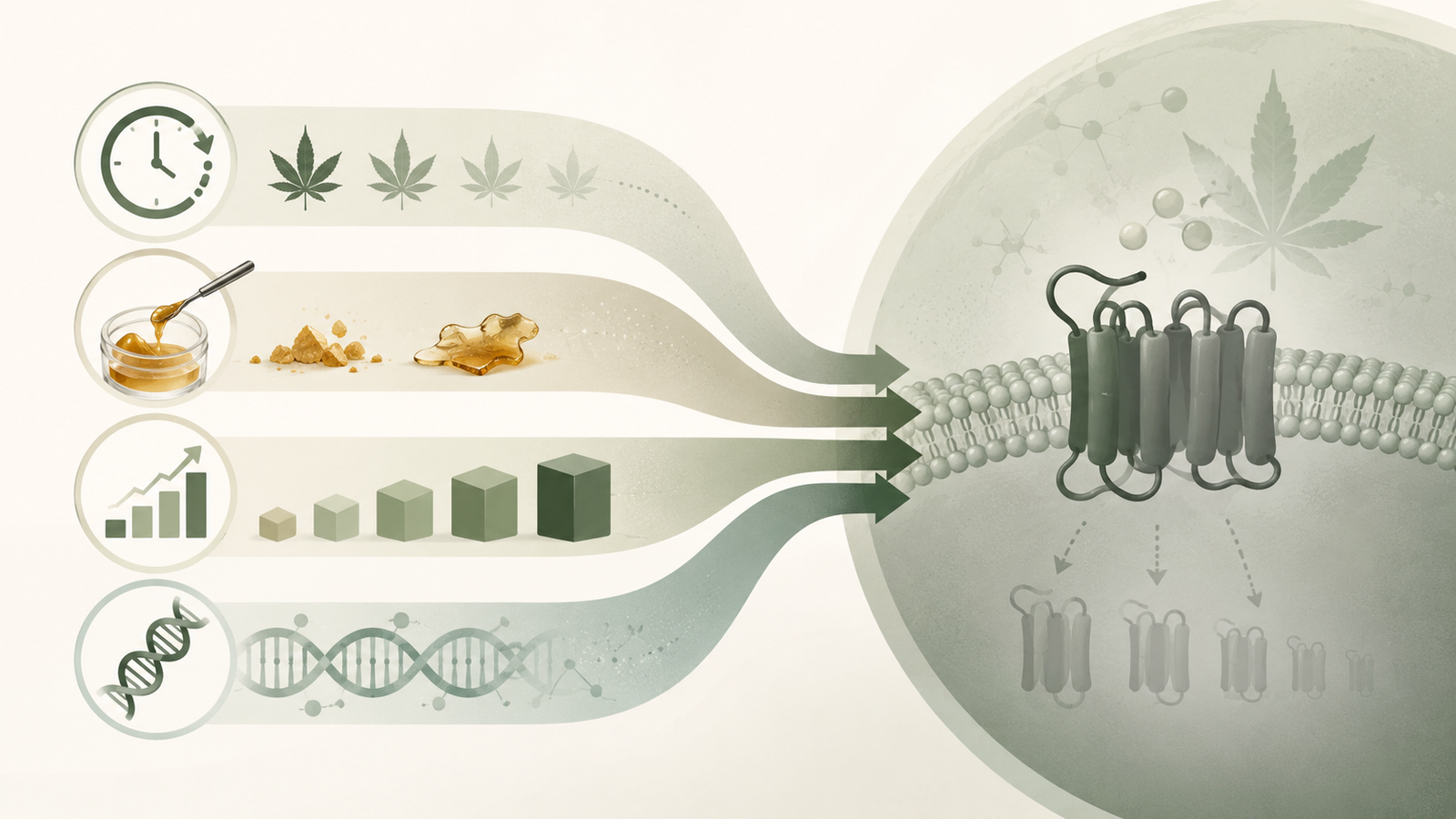
With regular use, those receptors adapt. Your brain reduces how many CB1 receptors are available — a process called downregulation — so the same dose does less. That’s cannabis tolerance in a nutshell. The good news: research shows this is reversible. A 2012 study in Molecular Psychiatry (Hirvonen et al.) found CB1 receptor levels return toward normal after roughly four weeks of abstinence.
Olivetol enters the story because of its structural similarity to cannabinoids. That resemblance is what a company chose to build a product and a patent around — which brings us to what olivetol is actually used for.
What is olivetol used for?
Olivetol has two very different uses, and it’s worth keeping them separate.
- Established use (chemistry): As documented by PubChem, olivetol is a laboratory compound — a reference standard and a building block used in the synthesis of cannabinoids and related molecules. This is well-established, uncontroversial chemistry.
- Proposed use (tolerance and intoxication): A composition patent, US 10,265,277 B2, proposes that olivetol can interact at CB1 receptors in a way that reduces the effects of THC. This is a proposed mechanism, not settled science.
The patent’s core idea is that olivetol competes for space at the CB1 receptor — think of it as occupying some of the parking spots THC would otherwise use. The patent also describes volunteers who reported feeling less intoxicated after taking it. It’s important to be honest about what that evidence is: those are informal, self-reported observations from a patent document, not results from a blinded clinical trial. The chemistry is established; this receptor mechanism is proposed and still needs independent clinical study.
This proposed mechanism is the reason olivetol is the active ingredient in Undoo Reset, an olivetol softgel that’s marketed as a way to help reset cannabis tolerance over a short protocol rather than a multi-week break. Whether it delivers on that is a fair question — we dig into what the patent and research actually show in a separate article.
Undoo Reset is a dietary supplement. It is not intended to diagnose, treat, cure, or prevent any disease, and it is not a way to pass a drug test. This page contains affiliate links. 21+ only; follow your local laws.
Is olivetol the same as CBD?
No. Olivetol and CBD are different compounds. CBD (cannabidiol) is a full cannabinoid built on that resorcinol backbone, while olivetol is the smaller resorcinol fragment on its own — it isn’t a cannabinoid itself. They share a family resemblance in structure, but they are not the same molecule and shouldn’t be treated as interchangeable.
Frequently asked questions
What is olivetol used for?
Its established use is in chemistry — as a reference standard and a building block for synthesizing cannabinoids. Separately, a patent (US 10,265,277 B2) proposes it can interact with CB1 receptors to blunt THC’s effects, which is why it’s the active ingredient in the tolerance-reset supplement Undoo Reset. That second use rests on a proposed mechanism, not proven clinical results.
What is olivetol made from?
Olivetol (5-pentylresorcinol) occurs naturally in some lichens and is closely related to olivetolic acid, a precursor the cannabis plant uses to build THC. For commercial and research use it’s typically produced synthetically to ensure high, consistent purity.
Is olivetol the same as CBD?
No. CBD is a complete cannabinoid; olivetol is a smaller resorcinol compound that forms part of the cannabinoid structure but isn’t a cannabinoid on its own. They’re chemically related but distinct.
Is olivetol safe?
Olivetol is sold as a dietary supplement, not an FDA-approved drug, so it hasn’t been through the same testing as a medication. As with any supplement, it’s sensible to check with a healthcare provider first — especially if you’re pregnant, nursing, on medication, or managing a health condition. We cover this in more detail in is olivetol safe.
The bottom line
Olivetol is a real, well-characterized compound: 5-pentylresorcinol, a natural lichen molecule and a known building block in cannabinoid chemistry. Its proposed role as a CB1-receptor competitor that could help reset THC tolerance is genuinely interesting — but it’s still a proposed mechanism, backed by a patent and informal reports rather than clinical trials. If you’re curious how that idea is put to work, see how the olivetol reset works and decide for yourself.