
Does CBD lower THC tolerance? Not directly, and the evidence here is mixed and limited. CBD does not bind your CB1 receptors the way THC does, so it does not drive the same receptor downregulation that builds THC tolerance in the first place. Where CBD may help is indirect: some users add it to take the edge off and keep their THC dose from creeping up, which slows the dose-escalation that pushes tolerance higher over time.
In other words, CBD is not a tolerance eraser or a reset button. Below we break down what CBD actually does at the receptor level, where it might indirectly help, whether you can build a tolerance to CBD, and what the honest state of the evidence looks like.
How THC builds tolerance in the first place
To understand why CBD is different, start with how THC tolerance forms. THC gets you high by binding directly to CB1 receptors in your brain. When you use cannabis regularly, your brain responds by pulling those receptors off the surface, a process called downregulation. Fewer available receptors means the same dose does less, which is the core of tolerance.
The good news is that this change is reversible. Hirvonen et al., 2012, published in Molecular Psychiatry, scanned the brains of chronic daily cannabis users and found their CB1 receptor availability returned toward normal after roughly four weeks of monitored abstinence. If you want the full picture of how this adaptation works, see our guide to what cannabis tolerance is, its causes and timeline.
The key point: THC tolerance is a CB1 story. So the real question is whether CBD touches that same receptor. Mostly, it does not.
Does CBD lower THC tolerance directly?
There is no strong evidence that CBD directly lowers or reverses THC tolerance. The reason comes down to how CBD interacts with your endocannabinoid system. Unlike THC, CBD is not a classic CB1 agonist. It does not fit into the CB1 receptor and switch it on the way THC does, so it does not drive the downregulation that creates tolerance, and there is no clear mechanism by which it would repair receptors that are already downregulated.
CBD acts through other, more indirect pathways in the body, and researchers are still mapping exactly what it does. The National Institute on Drug Abuse (NIDA) notes that cannabis research overall is still developing, and CBD’s effects in particular remain an active area of study rather than settled science.
So if you are hoping CBD will scrub your THC tolerance back to zero, that is not what the current evidence supports. What it can plausibly do is more modest, and it is worth understanding on its own terms.
How CBD might help your THC tolerance indirectly
Here is where CBD gets genuinely interesting for regular users. Even if it does not touch tolerance directly, it may help by changing how much THC you need in the first place.
Some users find that adding CBD alongside THC takes the edge off, softening anxiety or the racing, overstimulated feeling that can come with a strong dose. If a smaller, CBD-balanced dose feels satisfying, you may reach for less THC per session. Over weeks and months, that reduced THC intake is what actually matters for tolerance, because less CB1 stimulation means less downregulation.
Think of it this way: CBD is not resetting your receptors, it is potentially helping you stop pushing your dose higher and higher. That is an indirect benefit, not a cure. For a full playbook on managing THC intake without stopping, see how to lower weed tolerance without quitting.
Worth being honest here: this dose-reduction effect is largely reported by users and follows logically from the pharmacology, but it is not the same as a clinical trial proving CBD lowers THC tolerance. Treat it as a reasonable, low-risk experiment, not a guarantee.
Can you build a tolerance to CBD?
This one is debated, and the answer is less obvious than it is for THC. Because CBD does not activate CB1 receptors the way THC does, the classic downregulation mechanism that drives THC tolerance does not clearly apply to CBD. That is the main reason many people assume you cannot build a meaningful tolerance to it.
The picture is not entirely settled, though. Some users of CBD for specific effects report that they need more over time, while some studies have actually described a phenomenon where lower CBD doses seemed as effective as higher ones. The research is limited and sometimes points in different directions, so the honest summary is: CBD tolerance, if it exists, appears far less pronounced and less predictable than THC tolerance. We would not treat it as an established fact either way.
Does CBD reset tolerance, and can you use it on a tolerance break?
CBD does not reset THC tolerance in the way a true break does. A tolerance reset happens when your CB1 receptors recover, and that is driven by reducing THC exposure over time, as the receptor research shows. CBD is not doing that repair work for you.
That said, CBD can play a supporting role on a tolerance break. Because CBD on its own is generally non-intoxicating and does not meaningfully occupy CB1, using it during a break may give some people a calming ritual or takes the edge off cravings without feeding the THC tolerance they are trying to lower. Whether that counts as “cheating” on a break depends on your goals, and we get into the nuance in can you smoke on a tolerance break.
If your real aim is a genuine reset rather than just easing the discomfort, the mechanism you actually want is lower THC exposure, whether through a full break, a taper, or an olivetol-based approach.
Where a dedicated reset approach fits
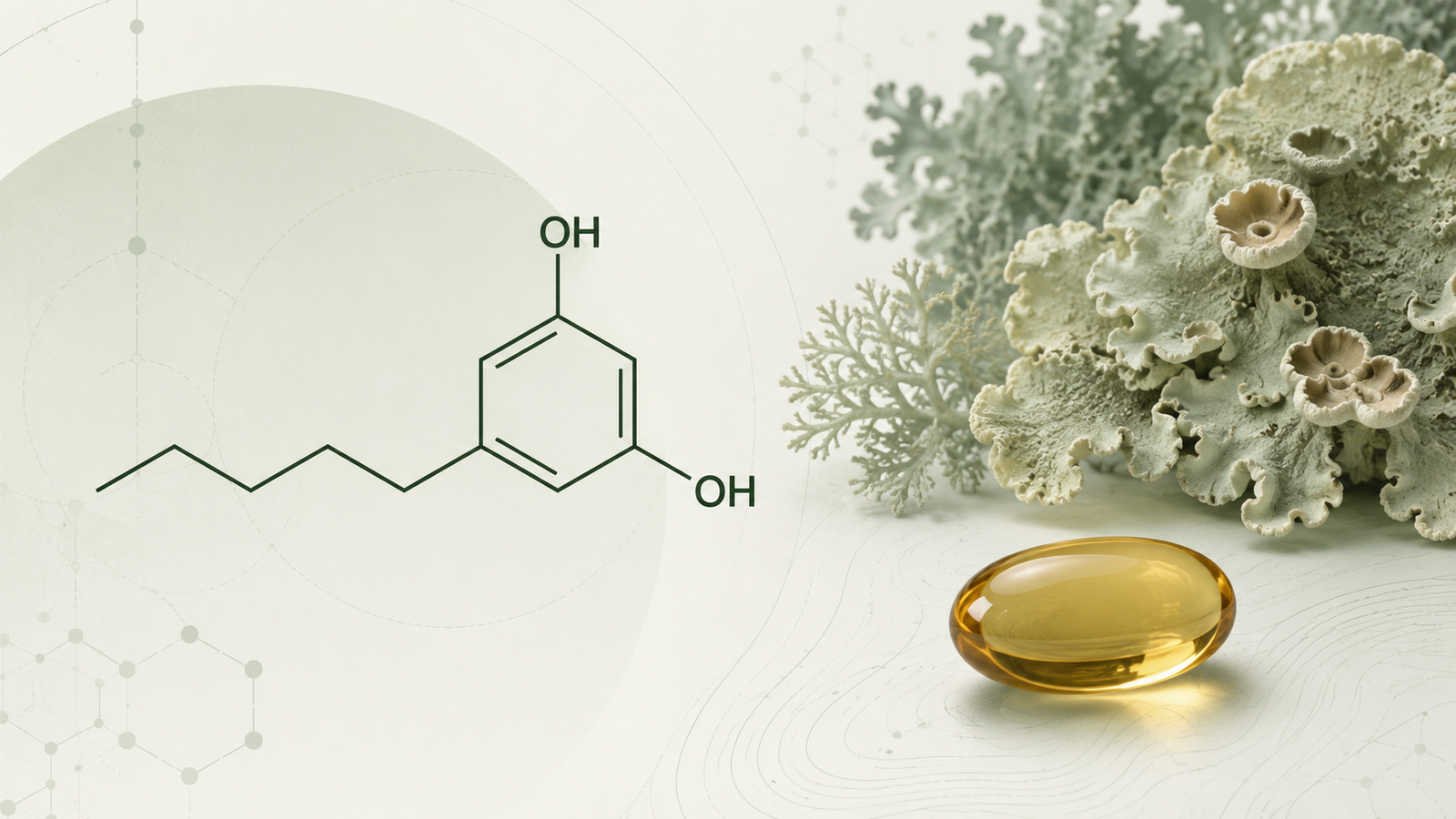
If CBD is the gentle, indirect option, the more targeted route is something built specifically around CB1 occupancy. Olivetol, the compound behind the supplement Undoo Reset, is designed around exactly that idea. Based on its composition patent, olivetol is marketed to influence receptor occupancy over a short protocol, aimed at refreshing tolerance without a long abstinence break.
The evidence is still early: the patent describes informal volunteer reports rather than clinical trials, so treat it as a proposed approach, not proven science. It is a different tool than CBD, aimed more directly at the tolerance mechanism.
Undoo Reset is a dietary supplement. It is not intended to diagnose, treat, cure, or prevent any disease, and it is not a way to pass a drug test. This page contains affiliate links. Cannabis laws vary by location, follow yours; 21+ only. If you are pregnant, nursing, on medication, or managing a health condition, check with a healthcare provider first.
Frequently asked questions
Does CBD lower THC tolerance?
Not directly. CBD does not bind CB1 receptors the way THC does, so it does not reverse the downregulation that builds THC tolerance. It may help indirectly if it lets you use less THC per session, which slows dose-escalation over time. The direct evidence is mixed and limited.
Can you build a tolerance to CBD?
It is debated. Because CBD does not activate CB1 the way THC does, the usual tolerance mechanism does not clearly apply, and any CBD tolerance appears far less pronounced than THC tolerance. Some users report needing more over time, but the research is limited and not conclusive either way.
Does CBD reset tolerance?
No. A real reset comes from your CB1 receptors recovering as THC exposure drops, which the research links to roughly four weeks of abstinence for heavy users. CBD does not do that repair work; it may only help by reducing how much THC you use.
Can you use CBD on a tolerance break?
Generally yes, since CBD on its own is non-intoxicating and does not meaningfully occupy CB1, so it should not feed the THC tolerance you are trying to lower. Many people use it as a calming ritual during a break. Whether it fits your goals depends on how strict you want the break to be.
The honest bottom line
CBD is a reasonable, low-risk tool for taking the edge off and potentially trimming your THC dose, but it is not a tolerance eraser and it will not reset your receptors. If you want an actual reset, focus on the thing that moves the needle: reducing THC exposure. To see how a targeted, olivetol-based reset is designed to work in just a few nights, read how Undoo Reset works and decide what fits your routine.